

7·
21 days agoYum, looks similar to chicken arroz caldo which is amazing on a cold day. Pure comfort food.
Yum, looks similar to chicken arroz caldo which is amazing on a cold day. Pure comfort food.

I’ve updated the Illustration.
Seems like they got it straight from the university press release here. I guess we can cut them some slack for using a bit of AI given the recent job losses at that university. They are reported to have lost around 4000 full time staff places in the last year, part of Australia’s recent cut backs to universities that don’t get much international reporting. That’s may hurt their ability to do quality research. Professor Archer noted that "quite clearly, from the many fascinating animals that we’ve already found in this deposit since 1983, we know that with more digging there will be a lot more surprises to come,”. So lets hope they continue to get support.

Yep that’s not how science is done, but the real story is more interesting I think. It wasn’t Einstein so much as Hubble and Lemaître, but he did acknowledge the error that caused him to miss the expanding universe in his equations.
"This circumstance of an expanding universe is irritating " – Albert Einstein, 1929.
In every direction in the sky, there is a background fizz of light. It is all that remains of the most intense flare of energy ever emitted. To explain it, we must look back to 1929. At that time Edwin Hubble, an astronomer at Caltech, proved that the universe was much larger than anyone had expected and expanding in all directions. From this discovery, two competing explanations developed. The Steady State Theory and the Big Bang. The first allows the universe to create new matter as it expands. Matter just appears from some hidden and rather ghostly source. That permits the universe to look more or less the same as it does today, at least as far as galaxies go. The second treats the universe as a closed system. One that begins with a vast and concentrated supply of energy, which decays into lesser forms. Spreading out as it does. The Big Bang universe is an expanding bubble of space-time, with a few wisps of hydrogen and helium that form the stars. The origins of the Big Bang theory began before Hubble’s discovery. A Russian physicist, A. A. Friedmann had used Einstein’s general relativity to model an expanding universe. At this time, it was a purely theoretical exercise. No one realized then that our universe was expanding.
The rate at which the universe expands is known as the Hubble-Lemaître constant. That naming honours Georges Lemaître. In some ways he was the co-discoverer of the Big Bang. He was among the first to model Einstein’s theories of space and time across an entire universe. As a physicist, Catholic priest and astronomer, he had a clear perspective on this question. He had no problem with the idea of the universe having a unique origin for example. Both Einstein and others had learned that Relativity predicted an expanding universe. But at the time, there was no physical evidence of that. Einstein’s solution was to introduce an extra value to the equations. That balanced the universe’s expansion with an opposing force. For the moment, a stable universe seemed possible.
In the 1920s, astronomers were unsure whether our galaxy was the only structure in the universe. There was no astronomical distance scale. That might explain why most astronomers assumed a static universe. Lemaître was willing to explore a different option. He had seen the evidence from Erwin Hubble’s early observations at Mount Wilson Observatory in California. He published his theory in 1927. He estimated the speed of the expansion using those measurements. They proved that Spacetime was rapidly expanding, carrying along the rest of the physical universe.
Wherever astronomers pointed their telescopes every distant object was part of this rapid expansion. Lemaître understood that an expanding universe must have a tiny beginning. He called this origin point the cosmic atom, from which all matter emerged. Einstein rejected the significance of the new astronomical discoveries for some time. He maintained his belief in a static, unchanging cosmos until 1930, when he traveled halfway across the world from Berlin to Pasadena to see Hubble’s evidence in person. He examined Hubble’s photographs, looked through his telescopes, and declared himself fully persuaded.

He called the stabilizing term Lamda also known as the Cosmic Constant his “worst blunder” but actually it forms the foundation for our present understanding the effects of dark energy, the mysterious force driving the observed accelerated expansion of the universe.
From the interview: The main takeaway is that humans are special, but so are birds and reptiles. So our brains are amazing, but bird brains are even as amazing. We have neurons other species do not have. But the chicken, even the chicken, they do have neurons that we don’t have. So evolution has found so many different ways to generate complex brains, not just only one direct pathway from amphibians to humans. In this case, the tree of intelligence is a tree. It’s not just a single branch.

Their population is 135,000 as of 2018 according to Wikipedia. Although local populations ie in the Arabian Sea might be at risk having been genetically isolated for up to 70,000 years and in smaller numbers
Ah that what happens when you Google an article which explanes some historical connection to Plato etc but it then uses that to make a completely unrelated point ie woke is bad. I should have read the whole thing before linking it. Looking at the other articles on the site it is indeed mostly right wing propaganda. A better point is Dawnkin’s post about Platonic forms here https://www.edge.org/response-detail/25366 in response to the question what scientific idea should be retired in 2014? He points out essentialism is a problem for accepting evolution, and for so many other things.
And Plato would have gotten away with it too, if not for those meddling kids and their cladistics. Essentialism has been hugely damaging and is the foundation of most types of Creationism. https://newdiscourses.com/2021/02/essentialism-logical-fallacy-plaguing-us-since-plato/
Indeed, and in addition if your religion is not supported by the facts it’s time to revise its assumptions. Religion can deal with new evidence, it’s just rather slow compared to say human lifetimes. I suspect thats because the basis of many faiths reasoning is built on philosophy, Christianity in particular. Which is a kind of precursor to experimental science where progress is slow or even circular.
Some points from the article:
Most scientific papers are incremental and rarely make headlines, with only a few results reaching the public. To assess scientific news, consider the timeline. Significant findings often build on years of research and also the scope, since broader claims usually lack robust support. Patience is essential - scientific conclusions are built via debate and scrutiny and evolve. While some science is just too incomplete to reach firm conclusions yet. The evidence is still accumulating. Like claims about the small-brained human relative Homo naledi. Did they make art, use fire, and bury their dead as claimed? Probably, but it’s too soon to say for sure.
Examples from the article include the South Pole telescope finding primordial waves from the earliest moments of the Big Bang - which sadly was just local dust. Also the phosphine in the Venusian atmosphere which the discoverers proposed came from some form of exotic life floating in the cloud tops. That was just flawed methodology.
Exciting research is often incorrect due to speculative ideas or over-narrow parameters. But speculation is needed. “if we knew the answers ahead of time, we wouldn’t need to do science”. Scientists also face pressure to publish high-impact results. That can lead to exaggerated findings or even fraud. Additionally, media sensationalism can distort scientific reporting. Trust in science has declined as contradictory claims in the media promote doubt about the scientific method. Some discoveries, like gravitational waves, are compelling and well-founded, but most intriguing results need caution.

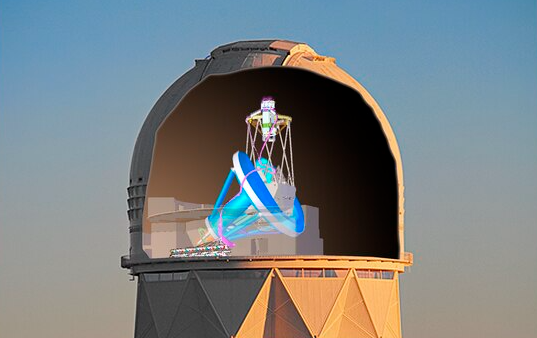
Its a nice bit of tech. 73M in construction costs. The focal plane instrumentation alone weighs 10 tonnes. It includes 5,000 small computer controlled fiber positioners. The entire focal plane can be reconfigured for the next exposure in less than two minutes while the telescope slews to the next field. The DESI instrument is capable of taking 5,000 simultaneous spectra of different Galaxies
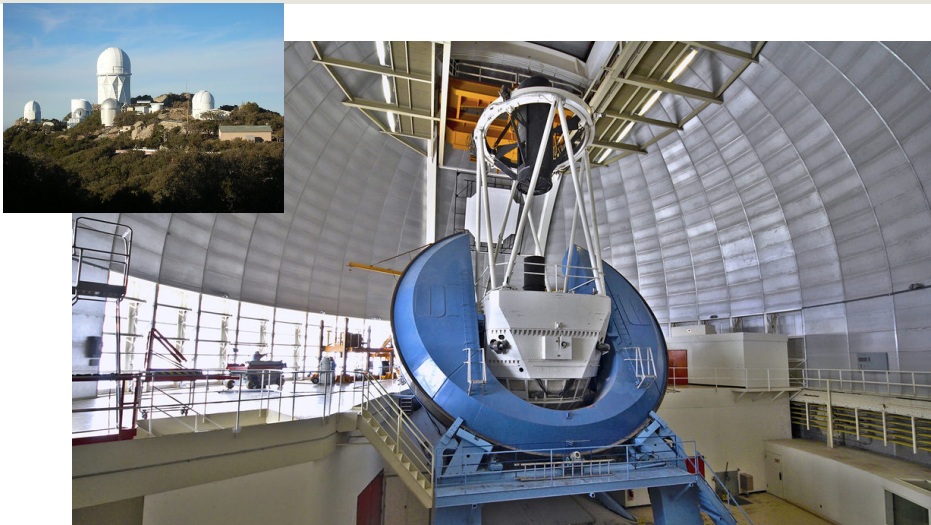
Also, for those concerned that Human brains have shrunk over the last thirty thousand years, there is good news: A large-scale study published in March 2024 by researchers at UC Davis Health found human brains have been getting larger over the last few decades. Study participants born in the 1970s had 6.6% larger brain volumes and almost 15% larger brain surface area than those born in the 1930s. This steady increase for people born after the 1930s, is believed to be due to better nutrition. https://health.ucdavis.edu/news/headlines/human-brains-are-getting-larger-that-may-be-good-news-for-dementia-risk/2024/03
These are the massive black holes that lurk at the core of most galaxies. Like the one at the center of our own milkyway galaxy. The question remains do they form at the center of baby galaxies or are they the seed which triggers a galaxy to develop and they just grow even larger over time. If early galaxies had massive black holes for their galaxy size, that suggests the last option. Primordial black holes that is ones that were formed in the big bang have been a possibility for a long time. They have been talked about by astronomers since the 1970s. It great that so much is being discovered now. Lots of surprises still coming I suspect. More info on primeval black holes here. https://physicsworld.com/a/concerning-primordial-black-holes/



Open shell is a helpful solution that replaces some of the problems in the windows UI at least for the start menu.
OpenShell github
It’s pretty easy to customize most things.