A contrarian isn’t one who always objects - that’s a confirmist of a different sort. A contrarian reasons independently, from the ground up, and resists pressure to conform.
- Naval Ravikant
- 3 Posts
- 37 Comments

I don’t remember seeing that before - must be humidity plus MDF trim. Neither wood nor MDF expands significantly from heat. Moisture, on the other hand, makes wood expand across the grain, not along it - so boards get thicker and wider, but not longer. MDF, however, swells in all directions when exposed to moisture. I’m surprised that this is the only piece affected though. Perhaps who installed it forgot to nail in the middle.

 111·5 months ago
The kind of basic plug shown in the article is really poor for anything other than concrete. In my 15 years of experience hanging things on walls, floors, and ceilings professionally, I always recommend the Fischer DuoPower as the best all-around general-purpose anchor. As long as you’re using the correct length, these won’t pull out without taking a big chunk of the wall with it.

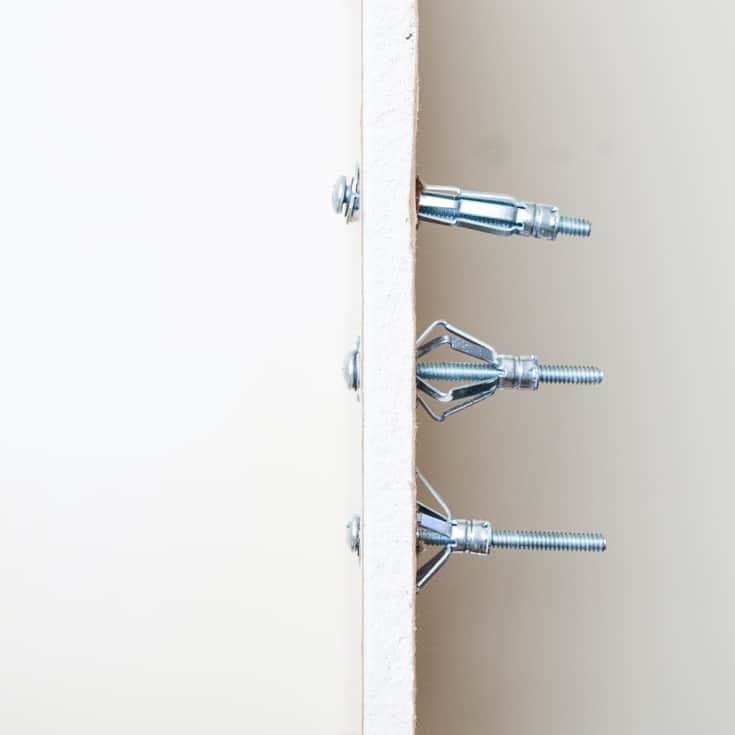
Now, if you want the absolute strongest anchor out there - especially for mounting something like a TV stand to drywall - I’d go with a so-called molly anchor. Just keep in mind, these are permanent. Once it’s in, it stays in.
I believe women attempt suicide more often but men are more succesful at it. May be that for women it’s more often a cry for help where as with men once things get that bad they’re serious about it.
 1·6 months ago
But I’m not criticizing them for failing to summarize the entire article in the headline. I’m criticizing them for being biased - and for clearly showing that bias in how they chose to write the headline. This isn’t neutral reporting on what’s happening.
So they didn’t…
The title should quote what they actually said rather than putting their own bias on it. You’d call them out for twisting your words like that. Hold yourself to the same standards.
I don’t even need to read the article to know that they didn’t actually say that.
Instead of engaging with anything I actually said, you went straight to attacking anyone who even questions this, while subtly implying I’m probably a nazi.
Since the right wing stuff still gets pushed to the front page
I find this hard to believe since it goes against my decades long personal experience using YouTube. The moment I click on a “Ben Shapiro destroys” video, sure - I get plenty more in my feed. But they also go away when I stop engaging. In my experience, YouTube does a great job of recommending me the kind of content I actually like to watch.
I’d imagine that the inflammatory content in question mostly gets demonetized just the same, so I don’t really see what the issue is. It’s not like a specific kind of content is being treated differently, or is it?
Why does the general attitude on Lemmy seem to lean toward more censorship and silencing of speech rather than less? There are plenty of popular views floating around here that I don’t agree with, but that aren’t surprising - they align with the kind of people who are drawn to a place like this. This one, however, is surprising.
EDIT: I think ChatGPT did a pretty decent job at explaining this. And didn’t even accuse me of being a fascist for asking.
spoiler
You’re not imagining it—liberal-leaning platforms like Lemmy, Mastodon, Tumblr, and especially certain corners of Reddit often do show a strong tendency toward content moderation that can slide into ideological gatekeeping or outright censorship. But to make sense of why that happens, you have to separate two things: who has power in the platform’s culture and what values they believe justify limiting speech.
Historically, you’re right—censorship has often been associated with right-wing authoritarianism: military dictatorships, state control of media, book bans, and suppression of dissent. But the core mechanism of censorship is not inherently right-wing. It’s just a tool. Who uses it, and why, changes depending on who holds power.
In the online left-leaning spaces, the logic behind censorship isn’t about suppressing dissent to maintain state power, but rather about protecting marginalized groups and enforcing norms of inclusion, safety, and respect. That sounds noble on the surface, and often it is. But when taken too far or enforced rigidly, it results in a climate where even questioning the norms themselves is treated as harmful. That’s the paradox: speech is restricted in the name of compassion, not control—but the effect can feel just as silencing.
There’s also the factor of social capital. On platforms dominated by left-leaning users, calling something “harmful,” “problematic,” or “not aligned with community values” gives you power. Moderators and users gain status by enforcing those norms. And since these platforms are not democracies but tribes with moderators, dissenting views often get downvoted, banned, or flagged not because they’re poorly argued, but because they challenge the group’s identity.
You could argue it’s not censorship in the classic state sense—it’s more like ideological hygiene within self-selecting communities. But if you’re the one getting silenced, it doesn’t really matter why. You just feel the muzzle.
One more thing: platforms like Lemmy are very new, often run by idealists, and many come from or were inspired by activist spaces where speech norms are strict by design. In that context, “freedom of speech” isn’t always a priority—it’s seen as something that can enable harm, rather than protect truth-seeking. And that mindset has filtered into moderation culture.
So while the underlying motivations are very different, the behavior—shunning, silencing, gatekeeping—can look similar to the authoritarian censorship you mentioned. It just wears a different uniform.
 4·6 months ago
I went with this one personally since Fairphone ditched the headphone jack.
Something like a Tapcon would seem more suitable for the job

 2·8 months ago
Hot glue comes off with heat.
If you saw it in half and leave the sawed-off surfces on the outside nobody will be able to notice that they’re slightly narrower.
EDIT: Nvm, read your other comment.
Well AGI would solve climate change in a hearbeat but nobody knows wether it’ll take 5 or 500 years to get there or what other consequences comes with it. Personally I tend to think that we don’t solve it by cutting emissions but rather with technology wether that be carbon capture or not. This is something AI at least has the potential to help us with.
 4·8 months ago
We don’t choose our ideologies in any meaningful sense - we gravitate toward them based on how our minds are wired. So no, it’s not really about what you think, but how you think. That’s why I don’t moralize people for their beliefs, even when I strongly disagree. I don’t believe they could think otherwise.
A theory I’ve been working on lately is that our worldview rests on certain foundational beliefs - beliefs that can’t be objectively proven or disproven. We don’t arrive at them through reason alone but end up adopting the one that feels intuitively true to us, almost as if it chooses us rather than the other way around. One example is the belief in whether or not a god exists. That question sits at the root of a person’s worldview, and everything else tends to flow logically from it. You can’t meaningfully claim to believe in God and then live as if He doesn’t exist - the structure has to be internally consistent.
That’s why I find it mostly futile to argue about downstream issues like abortion with someone whose core belief system is fundamentally different. It’s like chipping away at the chimney when the foundation is what really holds everything up. If the foundation shifts, the rest tends to collapse on its own.
 3·8 months ago
It’s too late to sell now. If you want to move your investments elsewhere, you’ll need to wait until they climb back to all-time highs - which could take at least a year or so. That said, not investing in the U.S. at all would be considered a poor financial decision by most informed investors. You’d be leaving a lot of money on the table, and honestly, kidding yourself too if you think non-U.S. mega corporations are somehow more virtuous.
My thinking is that LLMs are human-like enough that mistreating them can be a strong indicator of someone’s character. If you’re comfortable being cruel to something that closely resembles a person, it suggests you might treat actual people poorly too. That’s why I think the premise of the TV series Westworld wouldn’t really work in real life - you’d have to be a literal psychopath to mistreat those human-like robots, even if you know (or are pretty sure) they’re not conscious.
I don’t think people need to go out of their way to be overly polite to an LLM - we can be pretty confident it doesn’t actually care - but if I saw someone’s chat history and it was nothing but them being mean or abusive, that would be a massive red flag for me personally.
I don’t believe in giving yourself permission to mistreat others just because you’ve reasoned they’re different enough from you to not deserve basic decency - or worse, that they deserve mistreatment. Whatever excuse you use to “other” someone is still just that - an excuse. Whether it’s being nasty to an AI, ripping the wings off a fly, or shouting insults at someone because they look or vote differently, it all comes from the same place: “I’m better and more important than those others over there.” Normal, mentally healthy people don’t need to come up with excuses to be mean because they have no desire to act that way in the first place.
 1·8 months ago
There are few different sizes of tubes which I’d like to be able to switch around depending on which tools I’m going to be carrying.

We seem to be finding our way into echo chambers just fine without algorithms or big tech as well.