

1·
3 months agoUnfortunately I haven’t used it either, so I can’t answer your questions on this. I don’t have a personal need for any windows apps on my machines, outside of steam games.
Unfortunately I haven’t used it either, so I can’t answer your questions on this. I don’t have a personal need for any windows apps on my machines, outside of steam games.
WinBoat or WinApps might work for you. They’re very similar in function afaik, they both run a windows vm hidden in the background and integrate the windows apps alongside your Linux programs. It’s supposed to be fully compatible with all windows program except kernel anti-cheat.
WinBoat is newer and I think offers a nicer interface and a lot easier setup, WinApps is older so may be easier to find support/documentation on. I’d probably recommend starting with WinBoat first.

DMCA abuse is far too common. With this being clear abuse, and somewhat high profile, I wonder if there’s any chance of this bringing some real attention to it.

With your theory, you could run a DirectX to Vulkan translation layer on Windows and also get increased performance. Which may be true, but once again points the finger at bad drivers.
Yes, from what I’ve been told that actually does improve performance in many games.
The compatibility layer is overhead, but the key difference for many games is that DXVK swaps directX for Vulkan, and Vulkan often gets better performance.
The performance gains of using steamOS are twofold, there’s less OS load (this is particularly noticeable in low performance games, windows will consume much more battery on a game like Dead Cells than SteamOS will), and there’s also a vulkan performance increase for some games. My understanding is if you see a big performance increase in a demanding game, that’s usually thanks to vulkan.
You have to be careful about that too, the code isn’t written to be easily understood by casual reading.
For example, the code will describe your hot, neutral, and ground wires as “ungrounded, grounded, and grounding” wires. Applying rules meant for a “grounding” wire to a “grounded” wire can have serious issues.
The whole code is written like that, where it’s really easy to get confused if you don’t understand the exact terminology it uses.
As an electrician, it’s difficult to give good electrical advice over the internet.
First of all, you don’t know how capable someone actually is at doing work. There’s both a knowledge and a technique requirement for quality work. Bad electrical work can easily cause house fires and death, if I tell someone online how to fix an issue, and they electrocute themselves or burn down their house, I’m partially responsible for that.
Second, it’s hard to give good advice on how something should be done without seeing it in person. Small details that are hard to get from a description or image can change how stuff is required to be done, and the code is complicated and has lots of exceptions and different requirements. Also different areas have different code requirements, and different AHJ requirements, so fully accurate advice has to come from an electrician in your actual area.
Final thing I’ll mention is that getting qualified as an electrician is hard. Getting a full electrical license where I live requires 8 years of experience (4 years being directly supervised, then 4 years of light supervision). You also have to pass a pretty difficult exam, electricians usually spend 6+ months studying hard and taking training classes for the exam, and then it still has an abysmal first attempt pass rate and normally takes many attempts to eventually pass. Ultimately after all of that (8 years, months of focused study and classes, multiple test attempts), 25-30% of people are never able to pass and get their full license.
With all that considered, I’m happy to give advice to other electricians online. If they’re already certified I can have some confidence that they have the knowledge and skills to do a good job with any advice given. However trying to give actually good, responsible advice to someone who is uncertified and a complete unknown on terms of skill/knowledge/location with only a partial knowledge of their problems and setup, it’s hard. It’s much easier to recommend they just get a licensed electrician from their area to take a look at it.

Thanks for sharing this, I find the Amish practices and work arounds for technology really fascinating for some reason. I’d love to tour some of the more technology permissive Amish communities and learn about their rules and restrictions on its use, but unfortunately there’s not any living in my area (not to mention needing to get approval to be shown around).
There are different Amish groups with different tolerances for technology. Some Amish are allowed to use electricity/etc as long as they generate it themselves instead of buying it from a power company for example. They have amish-specific low function computers they use for spreadsheets and the like.
Direct internet access is normally not allowed now, but I could imagine that’s not universal or may not have been banned in the early days. Many modern Amish are allowed to use various work arounds for internet access, like fax services that they can fax a search to, and it will fax back screenshots of web results and websites.
They’re worried about advertising growth, not user growth. If anything this will make them more likely to ban users as they try to make the site more acceptable to advertisers.

That’s modern CEOs in a nutshell. Damage the company long term to get those good short term returns for shareholders.
This is the one I always hear these days.
A lot of newer games have “story mode” or other accessibility options for an easy playthrough.
But yeah I really miss cheat codes, especially the wackier ones.
Can’t have a UE5 game without spending a lot of time discussing performance.
My PC is pretty decent, but whenever I hear a game runs on UE5 I just figure I’ll pick it up on sale in 5-10 years when I have newer hardware.
In Japan, the patents they filed for were “extensions” of existing older patents. The new patents “updated” the old patents and could be used as if they filed when the original patent was. So they were able to file patents after Palworld came out, and then sue as if the patents existed before Palworld. Seems like bullshit to me, but I’m not a lawyer.
I don’t know if a similar mechanic can be used in the US patent system or not.
Every different part of computer setup/OS/resolution/extension/etc is a data point that can be used to uniquely identify you and track your web browsing. Generally any desktop computer will have a unique fingerprint, the only hardware setup I’ve heard of being common enough to avoid fingerprinting is something like using safari on a modern iphone.

The audience being a sacrifice doesn’t always work out when they’re the ones expected to buy the game.
In my experience it’s largely been unreal engine 5 games.
The issues with both Doom DA and Indiana Jones is that they have mandatory ray tracing that can’t be disabled. I generally think that ray tracing is a often a waste, it’s far too resource demanding, other lighting techniques can offer very similar visuals for a fraction of the cost.
Supposedly their cloud hosted version will block those responses, but the local run version does not.
















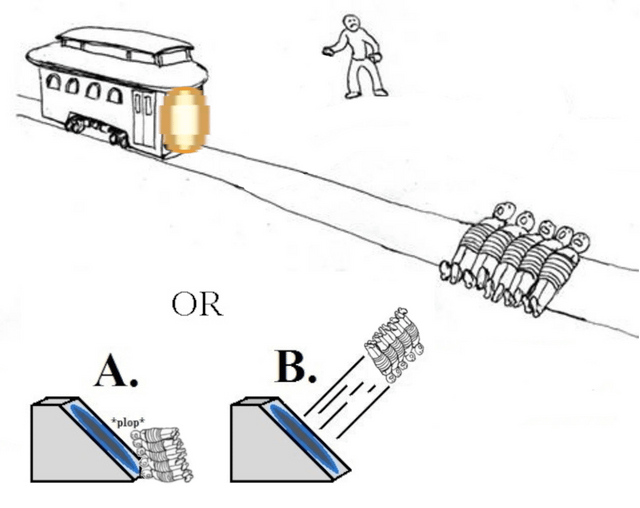
Wine is a compatibility layer, it works as a translator to let windows programs run on linux. You can think of it like having a translator who allows two people with different languages to talk to each other and work together.
WinBoat is completely different, this is actually running full windows in the background, and then only displaying the apps you want from it. There will be significantly more system resources used, and you won’t be able to run windows apps until the windows VM has started in the background, adding a startup delay. However the advantage is that it will support more software than wine does, with fewer issues.
Wine will always be the better option when it works, but for stuff that doesn’t work this is a decent option.